



Repentance
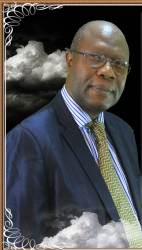
Pastor
Repentance
Many people wonder how repentance happens. Repentance has become commonplace in the eyes of Christians, yet it is the cornerstone of life transformation. To grow in the knowledge of God, we must know how to repent. In prayer, God gave me a deeper understanding of this important process. I realized that many people don't follow through with repentance because they become hypocrites. The enemy is quick to make us satisfied with a false repentance because he knows it leads to recidivism, which is the practice of sin. Fortunately, neither Satan, demons nor sorcerers have the power to stop the repentance of those who desire it.
Repentance is the culmination of a spiritual change in a person's life. When I speak of spiritual change, I literally mean an upheaval in the thought system of a repentant person, leading him or her to act differently from the way he or she used to.the result is a new awareness and a decision to act accordingly. True repentance leads to greater freedom in a person's life and, above all, to assurance of spirit. The process can be aborted at any time. The process can be short or long, depending on the individual and the circumstances. The process can be broken down into 3 necessary stages. If the person does not go through each of these stages, the process will not be completed, and repentance will fail.
The stage of accepting divine authority
To begin the road to repentance, the repentant person must first accept the authority of God's Word in his or her life. This is the first hurdle. Every man is born into Satan's kingdom.
Romans 3:23 For all have sinned and fall short of the glory of God;
In this kingdom, the main authority is not God but Satan. In this kingdom, one of the things that is instilled about authority is that we are free to believe what we want. There are no absolute truths, so everything is debatable. It is this way of thinking that we must first revoke in order to believe that there is a divine authority and that His word is the final authority in matters of conduct. If the person does not accept God's word as having authority over his or her life, repentance cannot begin. Why can't repentance begin? Because it is on the basis of God's word that the next step is built. The next step cannot happen because the Holy Spirit cannot work in a person who does not receive God's Word as the authority in matters of belief.
2 Timothy 3:16 All Scripture is given by inspiration of God, and is profitable for doctrine, for reproof, for correction, for instruction in righteousness,
Many people refuse to repent because they don't even agree that God's Word directs their lives. They then argue with the thoughts they received in Satan's kingdom. What are these arguments? The Bible contradicts itself, the interpretation of passages depends on each person, translation is not reliable, you don't always have to use the Bible, you can also reflect and have a good idea, why do we take the Bible, aren't there other books we can take? etc. For a born-again Christian, this stage is not as easy as you might think. I know a lot of Christians who, after 10 or 20 years of faith, don't want us to use the Word of God to exhort them. When you use biblical thinking, they become resistant because they know they won't have any arguments. So they accuse you of preaching all the time. If a Christian doesn't speak according to God's Word, who does he speak according to? Satan will do everything he can to prevent this step being taken, because he knows that afterwards he can lose the total influence he has over you. It is only God's word alone that has the authority to straighten out thoughts polluted by the kingdom of Satan in which we have been living. If we want to repent, it's on the basis of God's word. In other words, if God's word does not condemn us, there is no need to repent. Satan stops most people who want to leave his kingdom in their tracks. This is why there is a war raging in the world to recognize the Bible as the supreme authority in matters of conduct and faith.
The stage of revelation on sin
Once the first stage has been completed, and we accept the authority of God's Word over our lives, there's one more hurdle to overcome: grasping God's revelation about the sin we commit. God's Word has been given as a pedagogue to make sin what it is: a transgression of divine law. Even if we didn't have the Bible, God has already put into our conscience the ability to know that what we do transgresses his law. Speaking of pagans who didn't have the Bible, the Bible says:
Romans 2:15 they show that the work of the law is written in their hearts, their conscience bearing witness to it, and their thoughts alternately accusing or defending themselves.
That's why no one will be able to say to God it's because I didn't know God's Word that I transgressed it. Unfortunately, knowing that something is wrong doesn't necessarily lead us to change. This second step is designed to bring us to the realization that what we're doing is either contrary to God's law or against it. This is why we need to have a revelation of the seriousness of what is hidden in our thoughts. In the kingdom of Satan in which we were, we were not aware that our thoughts and actions were sinful. We did what the sons of rebellion do: do what pleases you and what seems good to you. But now that we are aware of God's law, there is a dilemma that arises in our hearts: in the flesh we see that we take pleasure in transgressing God's law, and in our understanding we understand that this is wrong. How do we get out of it?
Romans 7:18 I know that good dwells not in me, that is, in my flesh: I have the will, but not the power, to do good.
The process of repentance must continue first with the realization that what we were doing was wrong, and then that action must be taken to change the situation. This is where we come up against a second difficulty. In the satanic kingdom, we were used to living according to our interests and the good pleasure of our senses. The flesh ruled over us and gave us all sorts of justifications to drive us to sin and love sin. In our system of thinking, over time we devised a well-built fortress of reasoning to prevent or hinder us from submitting to God's will.
2 Corinthians 10:5 We overthrow reasonings and every lofty thing that exalts itself against the knowledge of God, and bring every thought captive to the obedience of Christ.
This system of reasoning is very powerful and effective unless it is subjected to the power of the Holy Spirit. At the moment of repentance, if this thought system is not shaken in the area of sin for which one repents, repentance cannot proceed. This is where hypocrisy begins to appear.
Here's an example: you're convinced that God's word is the authority on conduct, and you now know that the sin you practice is fornication. Fornication gives you definite pleasure. What happened? In Satan's kingdom you were convinced that it wasn't something serious enough to endanger your life. Sometimes Satan provided you with examples that led you to believe that since it was something others did, then it was acceptable. Sometimes Satan, through your friends, has given you justifications in the Bible, showing you the case of David who committed adultery, etc. You have arguments that militate in favor of your behavior. You have arguments that militate against creating an alarm in your mind. But then, in the course of a sermon or teaching, the preacher brings it up and embarrasses you on the subject. You're angry or puzzled because you even feel he's targeting you. Satan whispers in your ear that it's because the preacher is old-fashioned and doesn't understand young people's problems. But you're faced with a dilemma: "Now that I know it's bad, what should I do? If I give up this pleasure that makes me feel good, how am I going to live afterwards?
Notice that the person is not aware of the seriousness of his sin. Here's where deliverance comes from:
Romans 6:23 For the wages of sin is death; but the free gift of God is eternal life through Jesus Christ our Lord.
Anyone who sincerely wants to repent must receive the revelation of this word, because it opens our eyes to the nature of sin. Until this nature is revealed to us, sin will always be harmless. Here we have 2 terms: eternal life and death. Many people continue in sin because they only half repent. When we read this verse, we can understand that the death and life spoken of in the text concern the spiritual aspect of things. If the sinner saw physical death approaching, the reflex would be to seek to free himself from his sin in order to preserve his life. As long as the sinner fails to understand the seriousness of sin on both a physical and spiritual level, he will be a hypocrite.
Luke 12:1 In the meantime, when the people had gathered in their thousands to the point of treading on one another, Jesus began to say to his disciples: Above all, guard against the leaven of the Pharisees, which is hypocrisy.
indeed, the Pharisees in Jesus' day could do all sorts of good things without ever repenting, i.e. changing their way of thinking. The Pharisees could discern what was wrong from what was right, but were unwilling to repent and change their behavior. They knew Jesus was from God, but they were looking for a way not to receive him. That's why Jesus told his disciples to beware of the leaven of the Pharisees. This leaven was hypocrisy, which is a stronghold that prevents true repentance. When you're a hypocrite, you can intellectually recognize your wrongdoing and even weep with a lot of demonstration, without this sin being perceived by you in its true nature. You remain trapped in the harmless way in which Satan's kingdom originally presented sin to you, and you're not ready to make the necessary adjustments that will destroy that way of thinking. Sin is like a bomb that, if not disarmed, can hurt even years later.
The wages of sin is death, which means that a person who does not want to repent of his sin remains in its grip and in the satanic kingdom that will take him to hell. It is the realization of the price to be paid for having accepted the deceitful thoughts of Satan's kingdom that triggers the reaction to turn away from sin regardless of the price. If you are indeed faced with imminent danger, even if you have billions in a suitcase on your head and someone is chasing you with a knife to kill you, you will throw that suitcase away to flee and save your life. Why would you do that? Because you value your life more than the billions. If you don't, it's because those billions are more important than your life, and that's madness. So understanding that I will pay with my eternal life for the ephemeral pleasure that Satan has accustomed me to having now becomes a matter of life and death. It is when we have this revelation of the price of sin that we are moved to obey, to change our attitude, to take steps to adjust our lives in the direction of God's will. Without this trigger of divine revelation in our lives, we risk making a declaration of repentance that goes nowhere. This is why we see Christians tirelessly falling into the same sins. They have only repented verbally, their love for that sin untouched because lying satanic thoughts rule over them. They haven't had what the Bible calls the experience of the fear of the Lord that produces wisdom.
That's why when this fear occurs in a person's life he takes actions that will lead him away from the practice of this sin. You will see a person who used to steal, leave the midst of thieves without worrying about what he will lose. You'll see a prostitute abandon the street no matter what the price. You'll see a drunkard give up alcohol because it gives more value to his eternal life. The problem with those who half-repent is this: the consequences of sin are not immediate, because spiritual laws take time to manifest themselves, but once they start there's no stopping them. When you don't fully repent, you'll be inclined to continue because the punishment isn't immediate. Satan will help you along this path by making you religiously repentant and reassuring you that you won't go to hell, even though he knows you're practicing a sin that binds you every day.
Satan will prevent you from considering the root of your problem, which is false repentance, and will even lead you astray by making you believe that this sin is external to you and that there's nothing you can do about it. Don't believe these lies! there is no sin for which you cannot be delivered. By dying on the cross, Jesus said: all is accomplished! No prayer can deliver us from a sin we don't want to repent of, no fasting can deliver us from a sin we like to practice. If we really want to repent, the Bible says: we will know the truth, and the truth will set us free. that's why, before you pray a prayer of repentance, make sure you've changed your mind about sin. Don't waste time making useless prayers when the fear of eternal death is not a revelation in you. What you love no one can deliver you from. If you hate something, it cannot attract you. The Holy Spirit does not force anyone to give up sin. The Holy Spirit will give you the power to overcome sin, he will put the fear of the Lord in your heart, if and only if you want to renounce your flesh, your ease and the interests that sin gives you. If you want to repent, no one can stop you, but if you don't want to, no one can help you.
The stage of resounding victory over sin
Any repentance that does not produce victory over sin is false. This is how we measure the truth of repentance. If after repenting you fall back into the same sin, then go back to the root of that sin to find out what in your way of thinking caused that fall.
Take the time to ask yourself the following questions:
Am I truly submitted to God and his Word?
Do I believe that what God says in his Word is absolute truth for me?
What arguments make me doubt God's word?
At this stage, if there's the slightest doubt in your mind, it's a good idea to meet the pastor. You may not be born again!
If you're convinced that God's Word is the final authority, ask yourself the questions:
What was the thought that dominated me when I went back into this sin?
What should have stopped me that I brushed aside?
Why didn't I resist temptation?
What doors did I open that should have alerted me?
What feelings did I have when I committed myself to sin?
What pleasures did I find legitimate when they weren't?
Are there any safeguards that I overturned in God's Word that I shouldn't have?
Why wasn't the thought of the danger of dying spiritually a determining factor in my involvement in sin?
What should I have done to prevent this sin?
Why didn't I?
Are there any reproaches from God or his servant that I haven't dealt with in a profound way?
What has been the state of my relationship with God?
This introspection will lead you to see the process by which Satan's kingdom still has a hold on you. You will know the thoughts that are strongholds within you and for which you really need to repent by radically changing.
James 4:7 Submit yourselves therefore to God; resist the devil, and he will flee from you.
To escape the clutches of sin and move towards repentance, we must first submit to God, believing that his word is the final authority for our lives and accepting it as his way of thinking. Then the power of the Holy Spirit will be given to us to resist the devil, and the consequence is that Satan will no longer have power over us because the culture of his kingdom will no longer be in us. This is the third stage of repentance, namely total victory over sin. If you sincerely go before God with such questions, then you are left with one vital thing: you must resolve to pay the price of renouncing your carnal interests in order to submit to God and what he will require of you. If you have this determination, you will achieve a resounding victory over sin. It is this determination that will rob Satan of the strength he had when you were in his kingdom. Satan held you by all sorts of interests you derived from your sins. Before, you could justify them by the sordid gain sin brought you. Now that you're ready to give up these things for Christ, Satan will no longer have a hold on you. You will resist him more easily because you will no longer have anything in common with darkness. You'll realize that you have more to gain than to lose by adopting the new lifestyle of God's kingdom.
Satan's lie is to distract us from this introspection in order to keep us under his yoke. The power to resist him was already acquired 2,000 years ago on the cross; what's missing is our submission to God and the new rules of his Kingdom.
We have understood that repentance is a process that leads us to adjust our lives to God's word. This change is spiritual to the extent that we receive a hatred of the sin that was destroying our spiritual life, and a renewal of our thoughts that translates into concrete actions that testify to our resistance to Satan. This is spiritual growth. When a person fails to enter into this process, he or she is a hypocrite! Neither demons nor sorcerers can stop us from repenting.

Comments